
Essay: Sekiro's Triptych
Life – Devotion – Death

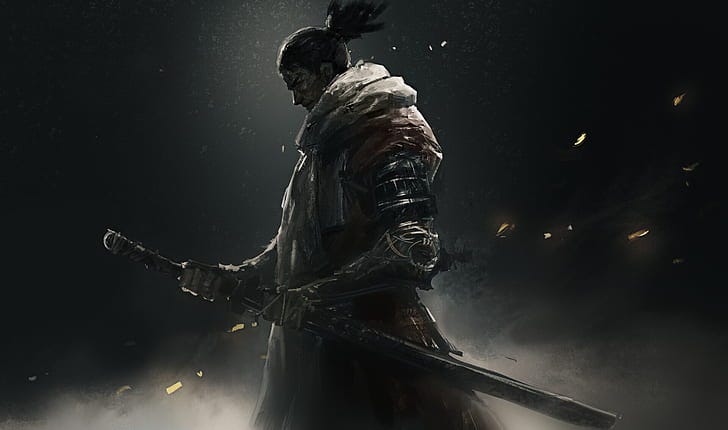
Year of Release: March 22, 2019
Developer: FromSoftware
Director / Creative Director: Hidetaka Miyazaki
Co-Director: Kazuhiro Hamatani
Producers: Yuzo Kojima, Takahiro Yamamoto
Lead Designers: Masaru Yamamura, Yuki Fukuda
Lead Programmer: Yoshitaka Suzuki
Composer: Yuka Kitamura
Life – Devotion – Death. A triptych in which each successive element gives meaning to the other. Sekiro may primarily be an action game, yet that does not prevent it from overflowing with artistic passion and communicating, in a unique way, the creators’ philosophy regarding these facets of human existence.
Sekiro resembles a martial art, as it invites you to tame your mind and your focus in order to learn its practices and immerse yourself in its philosophy. It demands perfection from the player and, through strict teaching that allows no deviations, trains you step by step in the art of the Shinobi. Each step is more painful than the last, yet at the same time more nourishing than anything you have ever tasted. All obstacles seem insurmountable, and thus triumph emerges.
The beauty of the player’s perfect response to the mechanical demands of the game is accompanied by the harmony of Wolf’s dance with his opponents. Sekiro, if you embrace it, becomes the art of the Shinobi: precise, persistent, and arduous, requiring undistracted devotion and repetition. Repetition until defeat loses all texture and you let yourself free to being guided solely by your instincts.
Opponents in Sekiro are usually subject to the same mechanisms as you. They have their own posture meter, their own attack and defense systems. Whatever the player can do, they can do as well—and this is what animates them as warriors and adds value to each of your victories. A sense of fair confrontation is created, where the winner is simply the better one.
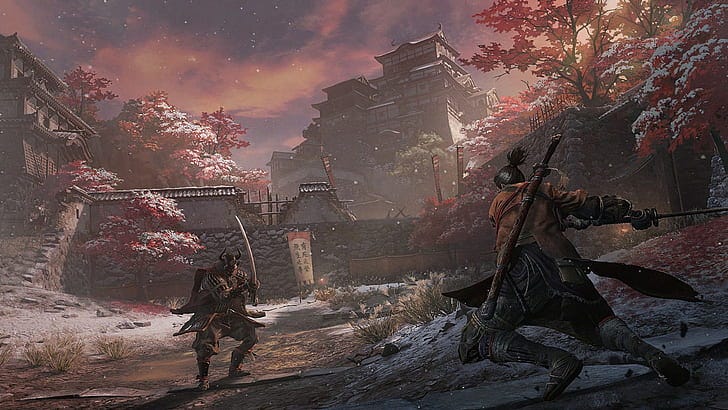
You will face many opponents; you will approach them with fear and leave with respect, as you learn that you owe each of your steps to them.
It is striking how every game by From Software treats death as something desirable. It carries honesty, humility, and serves as the affirmation of life. Those who cannot die are considered cursed (whether this is called the curse of the undead or dragonrot). Eternal life is not something you wish to negotiate; it always leads to decay—not only of the flesh but also of the spirit. Life corrupts, and if you cling to it you risk rotting.
In contrast to Christian ideals, where eternal life is radiant and blissful, the Buddhist roots of the Japanese lead them to depict it as filthy, foul‑smelling, suffused with dissatisfaction and—much to my surprise—dishonorable.
The monks of Senpu Temple, who in their attempt to reach enlightenment began experimenting on children to extend their lives, are the lowest form of existence in the world of Sekiro. Within imposing temples in the heart of nature, they themselves—dry‑faced and aged beyond the natural—have committed the ultimate sin, disturbing doubly the cycle of life/nature and reincarnation.
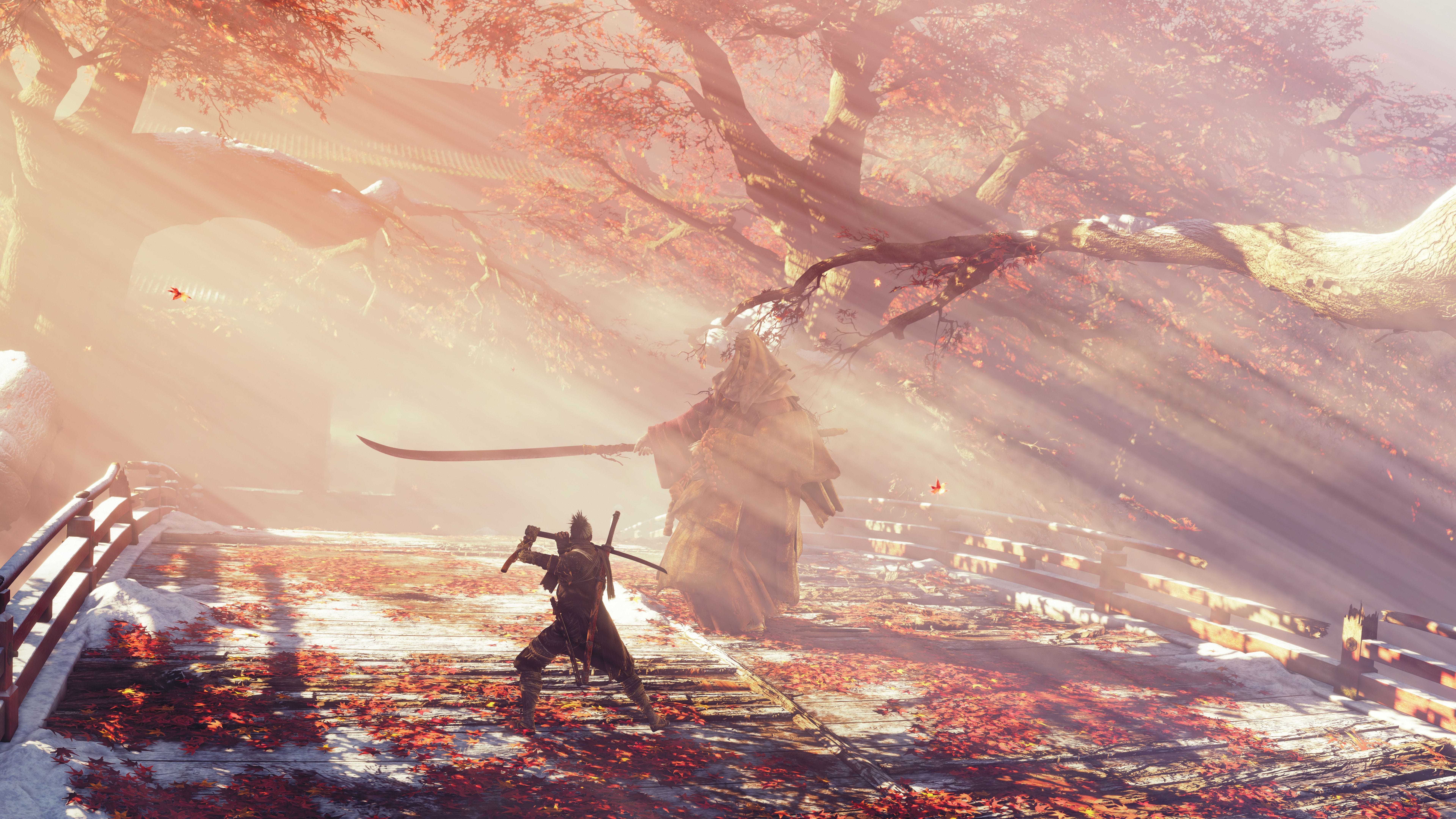
In its narrative, its imagery, and its mechanics alike, Sekiro embraces death, and it expects you to do the same: to surrender yourself to its hands. It does not matter how close to victory you came in previous attempts; each new effort is newborn, independent of the last, and demands from you your entire soul as an ally. Arrogance and haste have no place in the art of the Shinobi, and your expectations of victory can only taint you—so too can fear. You are called again and again to surrender to the dance and to your instincts, undistracted and pure, until you eventually reach Nirvana.
There are many abstract connections one can draw between Sekiro, martial arts, and the Buddhist dualities of good and evil, life and death. And this is what makes it intoxicating for someone like me, raised in the West, who has only just begun to wade into the philosophy of the East. Self‑denial, or even the near‑rejection of the self; humility; restraint; the embrace of the infinite world and the acceptance of life’s finitude; the elevation of the spirit through the taming of mind, body, and movement… all are here, in the absence of God, waiting for you to rediscover them.
To its Eastern roots one can also attribute the fact that the game lacks any notion of heroism. Violence in itself contains no triumph. Nor is it treated as sin, for such a view would leave open the door to virtue in self‑defense or counter‑violence. Violence in Sekiro is dirty, yes, but otherwise neutral—like soil. It is the only universal language and the tool to which humanity, and every other form of existence, returns again and again. A conclusion as predictable as the cycles of the seasons.
This human capacity for violence is what the game seeks to use narratively, without coloring it morally. The Japanese value system confuses me compared to the Western one, for it does not treat human life as the supreme good. Suicide is not sin; on the contrary, it may even be virtuous under certain conditions. On the other hand, the acceptance of defeat is considered shameful—even when the end is predetermined. This is reflected in the Shura Ending of the game, to which the player is led if they choose to obey the Iron Code during Wolf’s critical confrontation with his father, Owl.
There, Lady Emma turns against Wolf, despite knowing that he is the superior warrior and what that means for her fate. Yet she fights without hope of survival, with the certainty that her values and her honor become, at that moment, higher, sealing her worthy story.
The differences in the Japanese value system are so striking that the life of the individual is inseparably bound to the collective, and thus ceases to have meaning outside of it. A Shinobi without a master is a dishonored Shinobi.
Wolf risks ending up in a similar situation when confronted with the dilemma of whether to obey the Iron Code. Throughout the game, Wolf acts according to the wishes of his father–master, serving the heir of Ashina. He acts according to his role as Shinobi. When this ceases to apply, and obedience to Owl now means opposition to the heir, the game chooses a remarkably interesting way to present this dilemma to the player. During the course of the game, the player is often asked to make easy dialogue choices that require little thought. To make things even simpler, the game usually places first (or at the top) the option that makes the most narrative sense and leads to the more desirable outcome. This pattern repeats throughout the game and breaks only when Wolf encounters Owl.
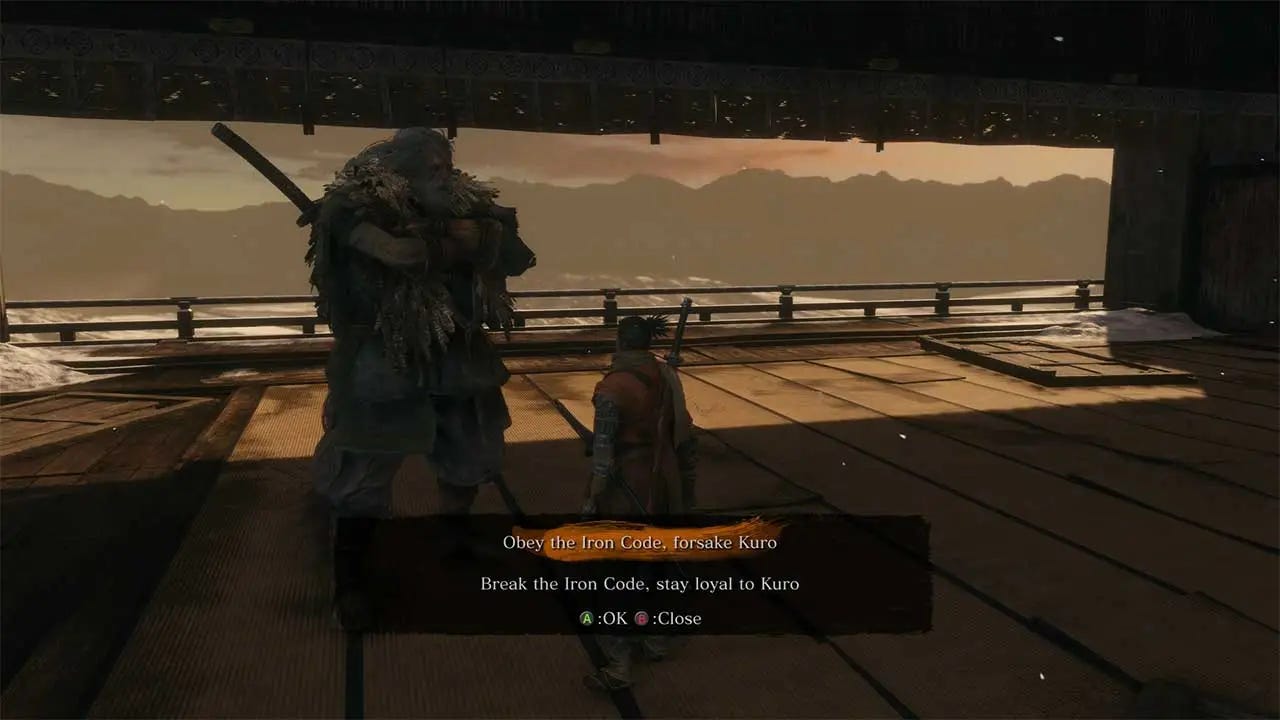
The player, alongside Wolf, is for the first time asked to defy tradition, to act against it, and to defy the Iron Code. Narratively, Sekiro clearly pushes you toward disobedience, but mechanically it sets you against your habits. There, in the unusual second choice, lies the honest and the morally and narratively satisfying path. It is a difficult turn of events, where both the player and Wolf must question everything they have learned until then and, for the first time, choose truly—with their own will—a path for themselves.
On the other hand, the first choice is easy. Narratively, Wolf continues to obey his true master. He does not question his role, he does not deviate from tradition, just as the player does not deviate mechanically from his/her habbits, and he is rewarded with the narratively undesirable and unchallenging Shura Ending. The two boss fights that follow, Lady Emma and the sickly Ishin, resemble nothing of Wolf’s previous opponents. The game ends abruptly; the player is excluded from the final chapter of the story, never fights Ishin in his sword saint form, never struggles, never fully matures, and Wolf lives dishonored…
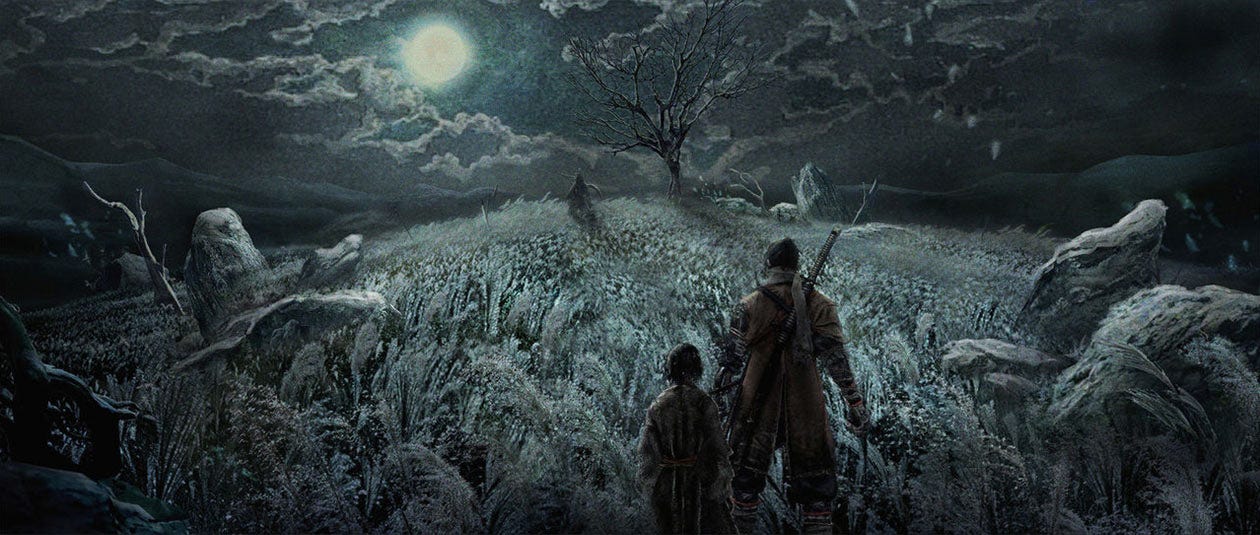
And so we observe that the Japanese know the value of questioning tradition and authority. Traditions have value; they treat them with respect. They are, after all, the inheritance of their ancestors and a fundamental connective tissue of their culture. Yet I believe Sekiro demands vigilance. Wolf revolts against the man to whom he “owes” everything—his life and his role, his very identity. On the other hand, we can also observe the deep conservatism and convenient stereotypes of the Japanese. After all, the ragged and unkempt Owl is the usurper, while the traditionally dressed heir… is the heir. As I said, it is difficult to question one’s heritage.
I began writing about Sekiro in an attempt to understand more deeply the culture that shapes it and to wade a little into Japanese cosmology. It is a way for me to enrich my own understanding of the real world, by discovering blind spots in my own cultural heritage through the lens of the East. Yet it was primarily a way to spend more time with a work of art that I love and to converse with it on a different plane. And the final taste that remains with me is that I have never before encountered a game that binds so harmoniously, so stoically, and so essentially its narrative and themes with its mechanics.
Very cool article. Was a pleasure to read! Love then we can properly analyse the importance of symbolism in our games, to discover and learn from them.